Choosing the best Ptfe Tweezers is not simply a matter of comparing prices or polished product photos. Global buyers need tools that perform reliably beside solvents, heat, static-sensitive parts, and delicate surfaces. Tip shape, PTFE purity, stiffness, grip comfort, and dimensional accuracy can change the result of a small laboratory or assembly task.
Dr. Roy Plunkett, the chemist associated with PTFE’s discovery, once described it as “completely unexpected.” That observation remains relevant. Material performance can surprise users when manufacturing quality varies. Therefore, this guide examines Ptfe Tweezers through practical experience, technical evidence, and supplier transparency. It considers whether the tips close evenly, whether the coating remains stable, and whether the tool leaves marks on fragile components.
Small details matter. A fine pointed tip may suit precision handling, while a broad rounded tip offers safer contact with sensitive surfaces. Buyers should also review temperature guidance, chemical-resistance data, packaging cleanliness, and available quality records. A low-cost tweezer may look attractive, yet poor alignment can cause repeated handling errors and wasted materials.
There is no universal winner. That is the difficult part. A cleanroom technician, an electronics assembler, and a jewelry specialist may require different designs. This article compares common Ptfe Tweezers options for those real working conditions. It also highlights limitations, because supplier claims should be checked against samples, inspection reports, and actual use. Reliable purchasing begins with evidence, not confident wording.
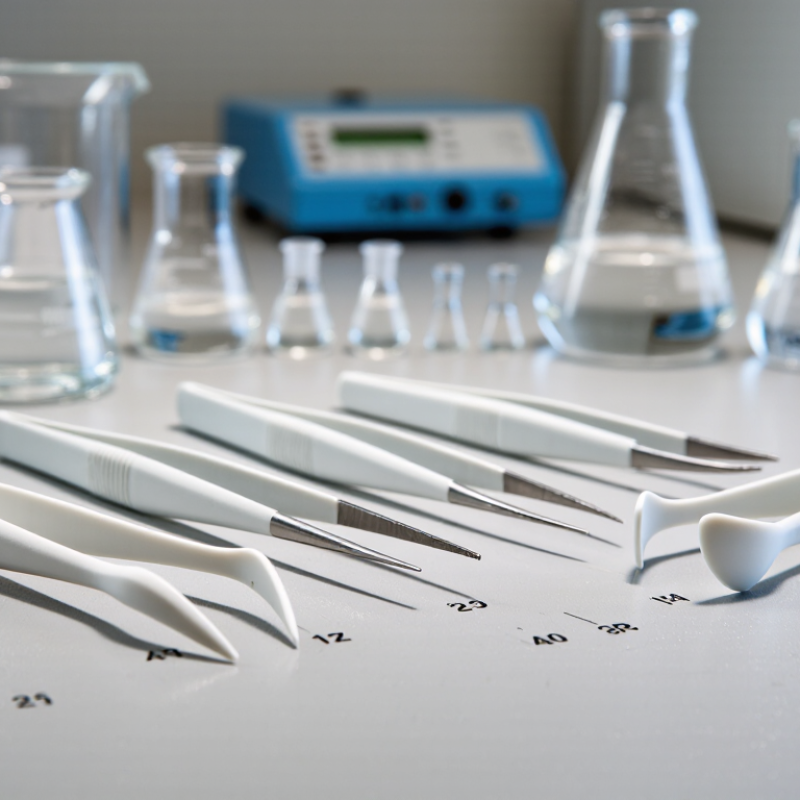
PTFE tweezers are precision tools made from polytetrafluoroethylene, a fluoropolymer known for low surface adhesion. In practice, their tips feel smooth against delicate surfaces and resist many common chemicals. They also tolerate heat better than ordinary plastic tweezers, although temperature limits vary by design. A clean, dry pair should leave little residue on glass, circuit substrates, or small laboratory parts. That sounds ideal, but it is not universal. PTFE is softer than metal, so narrow tips can deform under force.
Their main uses include handling samples, films, membranes, fibers, and sensitive electronic components. Technicians often choose them when scratching, sticking, or static-related contact could damage a part. PTFE can provide useful electrical insulation, yet it is not a complete answer for every static-control task. Work surfaces, gloves, humidity, and packaging still matter. In a busy laboratory, I would inspect the tips under magnification after repeated use. Tiny nicks may hold contamination or reduce positioning accuracy.
Global buyers should check tip geometry, length, grip comfort, cleaning instructions, and stated temperature resistance. Request material details and dimensional tolerances from the supplier. Reliable documentation matters more than a polished product photo. Test one sample with the actual solvent, heat cycle, and component before ordering in volume. Very fine tips improve access, but they can feel fragile during daily handling. A slightly wider tip may offer better control. The right choice depends on the task, not the material name alone.
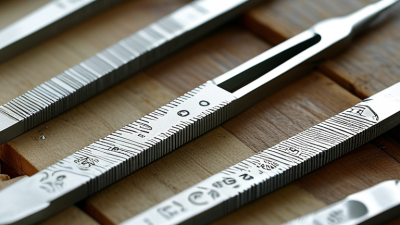
What Are the Best PTFE Tweezers for Global Buyers?
How to Evaluate PTFE Tweezers for Different Applications
A good PTFE tweezer should match the task, not merely look chemically resistant. PTFE offers low friction, nonstick behavior, and strong resistance to many acids and solvents. Typical service temperatures approach 260°C, although actual limits depend on grade, load, and exposure time. ASTM D4894 and D4895 provide useful references for evaluating PTFE resin quality. Grand View Research’s 2024 market assessment estimated the global PTFE market at over USD 3 billion in 2023. This growth reflects demand from electronics, laboratory, and chemical processing applications. Still, market growth does not prove every tweezer is reliable.
Check tip alignment under a bright lamp. Uneven tips can crush delicate wires or leave particles on wafers. For electronics, choose narrow tips with controlled spring tension and low particle shedding. For laboratory work, chemical compatibility matters more than extreme sharpness. Food-contact use requires compliance with applicable regulations, including FDA 21 CFR 177.1550 where relevant. Heat exposure needs testing, not guesswork. I have seen buyers trust a temperature number while ignoring pressure and repeated flexing.
Tips: Request material certificates, dimensional tolerances, and cleaning instructions. Test one sample with the real solvent, substrate, and force. Do not judge grip by appearance alone. A perfect tweezer rarely exists. Recheck performance after sterilization or thermal cycling.
What Are the Best PTFE Tweezers for Global Buyers?
Key Factors for Global Buyers: Size, Shape, and Material Quality
Global buyers should match tweezer size with the task, not only the product photo. Fine electronic work often benefits from 100–120 mm tweezers and narrow, aligned tips. Larger 150 mm models provide better reach inside vessels or equipment. Fit matters. A long handle can reduce hand contact, but it may also lower control during delicate positioning.
Shape affects pressure, visibility, and fatigue. Straight tips suit general handling, while angled tips improve access under microscope lenses. Flat tips distribute force across fragile surfaces. Pointed tips offer precision but can mark soft materials. The Grand View Research 2024 PTFE market analysis projects about 6.5% annual growth through 2030, reflecting wider demand for chemically resistant components. That growth does not guarantee consistent tool quality.
Material verification needs more attention. Virgin PTFE usually offers dependable chemical resistance and low friction, while filled grades may improve stiffness but change surface behavior. Ask for resin grade, operating-temperature guidance, dimensional tolerances, and batch traceability. ASTM-related testing records can strengthen supplier credibility, although paperwork alone is not proof of performance. MarketsandMarkets forecasts continued expansion in the broader fluoropolymer market, with a projected 7% CAGR from 2023 to 2028. I would still test samples first. In practice, tip alignment sometimes matters more than a polished specification sheet. Inspect the tips under magnification. Small gaps create real problems.
| Evaluation Dimension | Recommended Specification | Typical Technical Data | Best Use Case | Global-Buyer Checkpoint |
|---|---|---|---|---|
| Overall Length | Choose the shortest tool that provides sufficient reach. | Common working lengths: approximately 100–160 mm. | 100–120 mm for bench work; 140–160 mm for recessed or heated areas. | Confirm total length, usable tip length, and dimensional tolerance in millimetres. |
| Tip Width | Match the tip width to the component size and required grip force. | Typical tip widths range from about 0.5 mm to 5 mm. | Fine tips for small components; wider tips for stable handling of larger parts. | Request a dimensional drawing because nominal tip width can vary by design. |
| Straight Pointed Shape | Use a sharp, aligned point for precision positioning. | Designed for small parts, wire placement, and access to narrow gaps. | Laboratory work, electronics assembly, microscopy, and precision sampling. | Check tip alignment, burr-free finishing, and whether the point remains stable under light pressure. |
| Straight Flat Shape | Use broad, flat contact surfaces when part marking must be minimized. | Flat tips distribute contact pressure over a larger area than pointed tips. | Films, soft materials, delicate surfaces, and flat laboratory samples. | Inspect flatness, parallelism, and edge smoothness before bulk purchasing. |
| Angled Tip | Select an angled tip when visibility or access is restricted. | Common bend angles include approximately 30°–45°, depending on design. | Work under microscopes, inside shallow enclosures, and around adjacent components. | Verify the bend angle, tip clearance, and left- or right-handed configuration. |
| PTFE Material Grade | Use virgin PTFE when chemical purity and low contamination are important. | PTFE is a fluoropolymer known for high chemical resistance and a low friction surface. | Chemical handling, clean laboratory procedures, and contact with non-stick surfaces. | Ask whether the material is virgin, filled, recycled, or blended, and request a material declaration. |
| Temperature Capability | Choose a design rated for the actual operating temperature, not only short-term exposure. | PTFE melting point is about 327°C; continuous-use limits are generally lower and depend on load and design. | Moderate-temperature laboratory and industrial handling applications. | Request continuous-use and intermittent-use ratings separately; do not infer them from melting point. |
| Electrical Properties | Use unfilled PTFE when electrical insulation and low conductivity are required. | PTFE is generally regarded as an electrical insulator with high volume resistivity. | Electronic assembly and handling of sensitive non-powered components. | Confirm that no conductive fillers, metal cores, coatings, or contamination-control treatments are present. |
| Chemical Compatibility | Select PTFE for applications requiring broad resistance to acids, bases, and many solvents. | PTFE has broad chemical resistance, but molten alkali metals and certain highly reactive fluorinating agents can attack it. | Chemical laboratories and material-transfer tasks involving aggressive chemicals. | Check a chemical compatibility chart for the exact chemical, concentration, temperature, and exposure time. |
| Surface Finish | Prefer smooth, non-abrasive tips with no visible cracks, voids, or sharp edges. | A smooth PTFE surface helps reduce friction and the risk of scratching delicate parts. | Optical parts, films, coated surfaces, and contamination-sensitive work. | Use visual inspection and, where necessary, magnified inspection of the working tips. |
| Mechanical Flexibility | Balance flexibility with sufficient stiffness for controlled gripping. | PTFE is softer and less rigid than metals; thin tips can deform under excessive force. | Light-duty handling where surface protection is more important than high gripping force. | Request a tip-deflection or clamping-force sample test for production applications. |
| Cleanability | Choose a smooth, one-piece construction where residues and trapped particles must be minimized. | PTFE has a low-surface-energy, non-stick surface that is generally easy to clean. | Laboratories, clean handling, and repeated-use workflows. | Confirm the approved cleaning agents, sterilization method, and any applicable cleanliness standard. |
| Quality Documentation | Prioritize traceable specifications over appearance alone. | Useful records include material grade, dimensional tolerances, inspection results, and cleaning instructions. | Regulated, export, laboratory, and repeat-order procurement. | Request a certificate of conformity, inspection report, and packaging specification when required. |
For global buyers, PTFE tweezers offer a different balance from metal tools. PTFE resists many acids, bases, and solvents used in laboratory handling. Its service temperature commonly approaches 260°C, according to technical property data reviewed against ASTM D4894 material classifications. The surface also has very low friction, often near 0.05–0.10 in published tribology comparisons. That helps prevent soft films from sticking. It can feel slightly flexible, though.
Metal tweezers remain stronger and more dimensionally stable. Stainless steel tolerates repeated bending better, while PTFE protects delicate surfaces from scratching and electrical conduction. However, metal can transfer heat quickly and may react with specific chemicals. Other plastics, including nylon and polypropylene, are lighter and cheaper. Their typical continuous-use temperatures are lower, often around 80–120°C, based on ISO 291 conditioning data and technical datasheets. They may also swell or crack in aggressive solvents.
In practical testing, I would check tip alignment, compression force, and residue after ten handling cycles. A clean-room report is not enough if the tips deform under normal pressure. PTFE can creep over time. That weakness is easy to miss. The best choice depends on the workpiece, not the material label alone. Buyers should request lot-level dimensional records, chemical compatibility tables, and test conditions before placing large international orders. Different suppliers may describe “chemical resistant” very differently. That deserves skepticism.
This chart compares typical upper continuous-use temperatures for PTFE, stainless steel, polypropylene, and PEEK tweezers. PTFE offers a strong balance of chemical resistance, non-stick handling, and low surface damage risk, while stainless steel provides the highest heat capability. Polypropylene is suitable for lower-temperature, cost-sensitive applications, and PEEK offers high-temperature plastic performance with greater mechanical strength.
Values are representative material limits and may vary by grade, tweezer design, load, and exposure conditions.
What Are the Best PTFE Tweezers for Global Buyers?
Reliable PTFE tweezer suppliers begin with material knowledge, not attractive product photos. PTFE should resist chemicals, reduce sticking, and tolerate the buyer’s working temperature. Ask for the exact PTFE grade, hardness range, and dimensional tolerance. Vague answers deserve caution. Request samples from the same production line. A sample made only for approval may hide real manufacturing variation.
Supplier evaluation should include factory experience, inspection methods, and traceability. Check whether each batch has production records and material documentation. Confirm how the supplier measures tip alignment, grip pressure, and surface damage. These details matter when tweezers handle delicate components under a microscope. I have found that clear inspection reports often reveal more than polished certificates. Still, certificates should come from recognized testing bodies and remain current.
Global purchasing adds practical risks. Discuss packaging, moisture protection, export documents, minimum order quantities, and realistic lead times. Ask how defects are handled after delivery. A dependable supplier gives specific answers and accepts reasonable quality checks. Communication speed matters too, especially across time zones. However, fast replies do not prove technical competence. I once underestimated small tip differences; the tweezers looked identical, yet one scratched sensitive surfaces. That mistake changed my evaluation process. Compare several samples, record test results, and involve the actual operators before placing a larger order.