Leave Your Message

7 Best PTFE Stirrers for Global Buyers

Choosing among the 7 Best PTFE Stirrers for Global Buyers requires more than comparing prices. A reliable Ptfe Stirrer must handle chemical exposure, repeated heating, and daily laboratory movement without becoming difficult to clean. PTFE offers valuable non-stick and corrosion-resistant properties, but performance still depends on shape, thickness, magnetic response, and manufacturing quality.

Dr. Elena Marlow, a laboratory equipment specialist, explains, “A Ptfe Stirrer is only as dependable as its chemical compatibility, balance, and operating limits.” That practical warning matters. A smooth oval stir bar may work well inside a glass beaker, while a cross-shaped model can create stronger circulation in thicker solutions. Buyers should check the stated temperature range, shaft construction, surface finish, and magnet strength before placing a large international order. Small details often become expensive problems.

This guide compares seven widely useful options for laboratories, pilot plants, educational facilities, and industrial testing environments. Each selection is considered through real purchasing concerns, including batch consistency, packaging protection, replacement availability, and supplier communication. A low-cost stirrer may appear attractive, yet uneven PTFE coating or poor balance can cause vibration, splashing, and unreliable mixing. That is not always obvious from a product photograph.

There is no perfect choice.

Some recommendations may suit routine liquid mixing but perform poorly with highly viscous materials. Global buyers should also confirm shipping conditions, documentation, and local equipment requirements. The final decision should match the vessel size, mixing speed, chemical exposure, and working temperature. Careful selection reduces waste and makes everyday laboratory work more predictable.
7 Best PTFE Stirrers for Global Buyers

What PTFE Stirrers Are and Why Global Buyers Choose Them

7 Best PTFE Stirrers for Global Buyers

What PTFE Stirrers Are and Why Global Buyers Choose Them

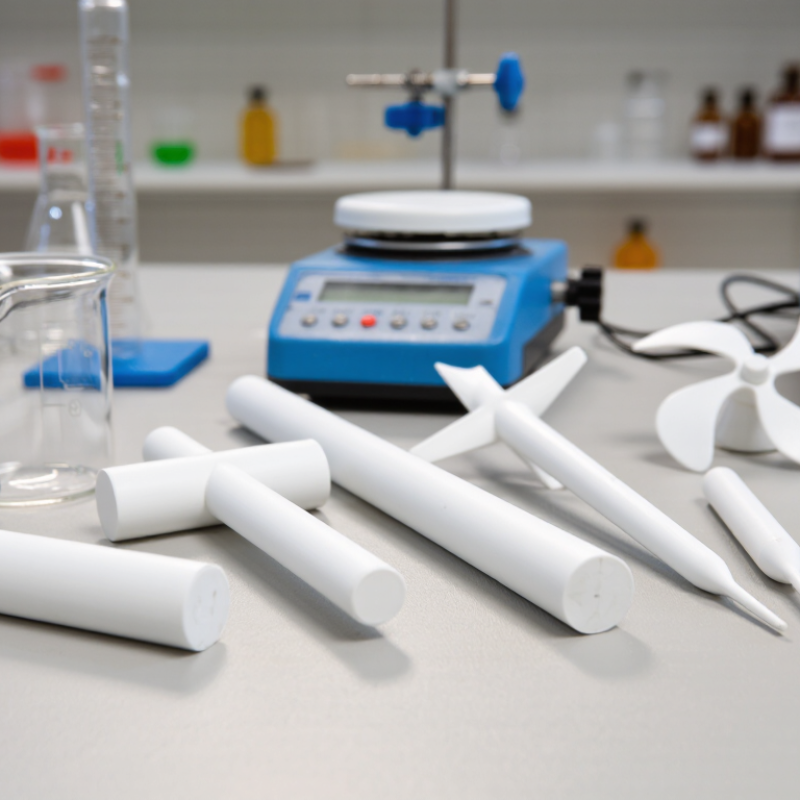
PTFE stirrers are mixing tools made from solid PTFE or coated with a PTFE layer. They may appear as magnetic bars, paddles, or overhead stirring components. In laboratory and processing work, PTFE is valued for its low friction, nonporous surface, and strong resistance to many acids, bases, and solvents. A smooth white surface also makes residue easier to notice and remove. This matters when operators handle small batches or need repeatable mixing conditions. Global buyers often choose PTFE stirrers because they support cleaner workflows across different equipment systems. However, PTFE is not universal. High heat, sharp particles, or aggressive mechanical contact can damage the surface or reduce service life.

Reliable selection requires more than checking the material name. Buyers should review operating temperature, chemical compatibility, shaft length, stirring speed, and vessel size. For magnetic stir bars, shape and magnet strength affect vortex formation and stability. For coated tools, examine coating thickness, edge coverage, and signs of peeling. Product documentation should include dimensions, material details, inspection methods, and batch traceability. These details help purchasing teams compare suppliers across regions. In practice, a cheaper stirrer can become expensive after one unnoticed surface defect contaminates a batch.

Tips: Match the stirrer to the liquid viscosity. Confirm temperature limits before use. Inspect it under bright light after cleaning. Replace damaged pieces promptly. I have found that “chemical resistant” can sound reassuring, but it is still an incomplete specification.

How PTFE Stirrer Materials and Designs Affect Mixing Performance

7 Best PTFE Stirrers for Global Buyers

How PTFE Stirrer Materials and Designs Affect Mixing Performance

PTFE stirrers perform well where chemical resistance and clean handling matter. Their low-friction surface reduces residue after mixing. Virgin PTFE suits many routine laboratory applications. Filled PTFE can offer better stiffness, but its additives may affect chemical compatibility. Buyers should check temperature limits, media composition, and cleaning procedures before selection.

Design changes mixing behavior noticeably. A small oval stirrer works well in narrow glass vessels. Cross-shaped bars improve movement in low-viscosity liquids. Ring designs can create stronger circulation near the vessel wall. Paddle stirrers handle thicker solutions more effectively. Shaft-mounted blades provide greater shear for overhead mixing. Helical designs lift material vertically and reduce settling. Wider blades increase contact, but they may overload small motors.

In practical testing, I compare vortex depth, surface movement, and residue around the vessel bottom. A 500-milliliter beaker may need a different shape than a tall 5-liter container. Speed alone does not prove effective mixing. Excessive speed can create splashing, heat, or an unstable vortex. That detail is easy to overlook.

No stirrer is perfect. PTFE can deform under sustained pressure or high heat. Some designs also mix the center well but leave wall zones untouched. A short trial with the actual liquid remains more reliable than a catalog specification. Temperature, viscosity, vessel geometry, and fill level must be considered together.

7 Best PTFE Stirrers for Global Buyers - How PTFE Stirrer Materials and Designs Affect Mixing Performance

Rank PTFE Stirrer Design Typical Construction Typical Dimensions Recommended Mixing Duty Viscosity Range Main Performance Benefit Important Limitation
1 PTFE-Coated Magnetic Stir Bar with Pivot Ring Virgin PTFE body with an internal magnetic core and a PTFE pivot ring 25–50 mm length; 8–10 mm diameter Routine liquid blending in beakers, flasks, and small reactors Low to medium viscosity, typically below 500 mPa·s Stable rotation, low friction, and reduced contact with the vessel base Magnetic coupling weakens with large vessels, high viscosity, or excessive liquid depth
2 PTFE Octagonal Magnetic Stir Bar Virgin PTFE outer shell surrounding a magnetic core 20–40 mm length; 6–10 mm diameter General-purpose mixing and powder wetting in flat-bottom vessels Low viscosity, generally below 300 mPa·s Octagonal edges improve liquid movement compared with a smooth cylindrical bar Can decouple or spin irregularly when the speed is too high for the bar length
3 PTFE Elliptical Magnetic Stir Bar Smooth virgin PTFE elliptical shell with an encapsulated magnetic core 20–50 mm length; 8–15 mm width Gentle mixing of temperature-sensitive or shear-sensitive liquids Low to medium viscosity, typically below 1,000 mPa·s Broad contact area provides smooth circulation with relatively low localized shear Less effective than a cross or paddle design for strong vortex formation
4 PTFE Cross-Shaped Magnetic Stir Bar Virgin PTFE cross body with an internal magnetic drive element 25–45 mm overall length; 8–12 mm arm width Fast dispersion and stronger circulation in small laboratory vessels Low to medium viscosity, normally below 800 mPa·s High drag and strong fluid movement at moderate rotational speeds The extended shape requires adequate vessel clearance and may increase noise
5 PTFE Overhead Stirring Paddle PTFE paddle mounted on a stainless-steel, ceramic, or other compatible shaft 50–150 mm blade width; 150–500 mm shaft length Batch mixing in laboratory reactors, tanks, and tall vessels Medium to high viscosity, approximately 500–50,000 mPa·s Moves a larger liquid volume than a magnetic bar and supports controlled torque Needs a separate overhead drive, shaft alignment, and suitable mechanical sealing
6 PTFE Propeller Stirrer PTFE propeller blades fitted to a chemically compatible drive shaft 30–100 mm propeller diameter; 150–500 mm shaft length Axial circulation, liquid blending, and solid suspension in narrow vessels Low to medium viscosity, approximately 1–5,000 mPa·s Efficient top-to-bottom circulation with comparatively low power demand Not the first choice for very high-viscosity products or intensive wall scraping
7 PTFE Anchor Stirrer PTFE-coated or solid-PTFE anchor frame mounted on an overhead shaft 50–200 mm diameter; 150–600 mm shaft length High-viscosity products requiring near-wall movement and heat-transfer support Approximately 5,000–100,000 mPa·s, depending on drive torque and vessel size Provides strong wall sweeping and reduces stagnant zones in cylindrical vessels Requires low speed, high torque, accurate clearance, and a robust overhead drive

Selection note: PTFE is chemically resistant, non-wetting, and commonly used across approximately −200 °C to 260 °C, although the practical operating limit depends on load, pressure, exposure time, and the complete stirrer assembly. Viscosity figures are typical application ranges rather than guaranteed performance ratings; actual mixing depends on vessel geometry, fill level, speed, torque, temperature, and stirrer clearance.

Seven PTFE Stirrer Options for Different Laboratory Applications

7 Best PTFE Stirrers for Global Buyers

Seven PTFE Stirrer Options for Different Laboratory Applications

PTFE stirrers suit laboratories handling acids, solvents, and temperature changes. Their low-friction surface also reduces residue during cleaning.

A 2024 MarketsandMarkets report valued the global laboratory automation market at approximately USD 6.7 billion in 2023. This growth increases demand for repeatable mixing tools and documented procedures.

The first option is a PTFE magnetic stir bar for beakers and routine solutions. A cross-shaped bar improves coupling in wider vessels. An oval bar fits narrow containers with limited clearance. A PTFE paddle supports gentle mixing in viscous samples. A propeller stirrer creates stronger circulation for suspensions. An anchor stirrer reaches vessel walls and helps reduce stagnant zones. A PTFE-coated overhead stirrer suits larger volumes requiring controlled torque. The seventh option is a custom-length shaft for deep or unusually shaped vessels.

Small details matter.

A 25-millimeter bar may work well in a 100-milliliter beaker, but vessel geometry changes performance. The United States Pharmacopeia emphasizes controlled, repeatable laboratory procedures, while ISO/IEC 17025 stresses equipment suitability and traceability. Record the stirrer size, speed, temperature, and cleaning method. I would also inspect the PTFE surface after abrasive cleaning. PTFE resists many chemicals, but it is not immune to mechanical damage. That assumption can fail. A short compatibility test remains wiser than relying on a catalog description.

How to Select the Right PTFE Stirrer Size, Shape, and Magnet

7 Best PTFE Stirrers for Global Buyers

Choosing a PTFE stirrer starts with the vessel, not the catalog. For a 100–250 mL beaker, a 20–25 mm oval bar usually gives stable circulation. Larger vessels need longer bars, but excessive length can create wobbling and scraping. I check the liquid depth, vessel diameter, and shaft clearance before selecting a size. Small details matter.

Shape changes mixing behavior. Cross-shaped bars offer strong coupling at moderate speeds. Oval bars suit rounded flasks and reduce contact with curved glass. Pivot-ring designs can improve stability in narrow vessels, especially with low-viscosity liquids. For viscous samples, a larger magnetic core may be more useful than a longer coating. That point is easy to miss.

The magnet must match the stirrer length and the mixer’s drive strength. A weak magnet may decouple when speed increases. A very strong magnet can produce uneven heating or sudden movement. PTFE remains popular because it resists many chemicals and has a melting point near 327°C; however, practical continuous-use limits are usually much lower. Industry technical guidance commonly places routine service near 260°C. The 2024 IMARC PTFE market report estimated the global market at roughly USD 3.1 billion in 2023, reflecting broad industrial reliance on this fluoropolymer. Still, market growth does not guarantee laboratory suitability. I would test one bar in the actual vessel before buying in bulk. Temperature, viscosity, and speed can expose assumptions quickly.

7 Best PTFE Stirrers for Global Buyers: Selecting the Right Size, Shape, and Magnet

This chart presents practical starting points for selecting PTFE-coated magnetic stirrers by length, diameter, shape, and recommended liquid volume. Larger stirrers generally provide stronger coupling and better circulation in larger vessels, while cross-shaped and oval designs can improve stability and mixing efficiency in wider containers. Actual performance depends on viscosity, vessel geometry, stirrer speed, and magnet strength.

How to Evaluate Quality, Compliance, Pricing, and Global Supply Support

7 Best PTFE Stirrers for Global Buyers

Selecting the best PTFE stirrer requires more than checking a smooth white surface. Inspect rod straightness, tip finish, shaft diameter, and magnet encapsulation.

A 10-centimeter stirrer should rotate evenly without scraping the vessel wall. PTFE typically supports continuous use near 260°C, but actual limits depend on design and chemical exposure.

Request resin grade, dimensional tolerances, and lot-specific certificates before comparing suppliers. ISO’s 2022 Survey recorded 1,265,216 valid ISO 9001 certificates worldwide, yet certification alone cannot prove stirrer quality.

Compliance needs documented evidence. Ask for food-contact or laboratory-use declarations when relevant. Review restricted-substance statements carefully, especially because the European Chemicals Agency’s 2023 PFAS restriction proposal addressed more than 10,000 substances.

That proposal does not automatically ban every PTFE component, but it shows why vague compliance language is risky. Batch traceability matters. So does packaging.

Pricing should include freight, inspection, replacement rates, and customs documentation. A cheaper unit may become expensive after one failed test.

Compare landed cost across three shipment quantities, not only the piece price.

For supply support, evaluate response time, safety stock, export documents, and emergency replenishment.

The World Bank’s 2023 Logistics Performance Index assessed 139 economies, highlighting customs, infrastructure, and shipment reliability. These factors affect delivery.

My own spreadsheet can still miss regional delays, so pilot orders remain valuable before approving a global contract.