In the world of global procurement, PTFE stir bars emerge as essential tools. Their unique properties make them invaluable in various applications. PTFE, or polytetrafluoroethylene, offers excellent chemical resistance and low friction. These features translate into effective mixing solutions in laboratories and industries.
PTFE stir bars are widely used across different sectors. They help researchers achieve uniform solutions in chemical processes. In the pharmaceutical industry, purity is crucial. Using a PTFE stir bar ensures no contamination occurs during mixing. This contributes to reliable results and improved product quality.
However, not all uses of PTFE stir bars are seamless. Some might find them challenging to retrieve from tall flasks or be concerned about their longevity. It is essential to weigh these details when integrating them into procurement strategies. By understanding both advantages and limitations, teams can enhance their operational efficiency. Balancing expertise with practical insights is key in optimizing the use of PTFE stir bars.
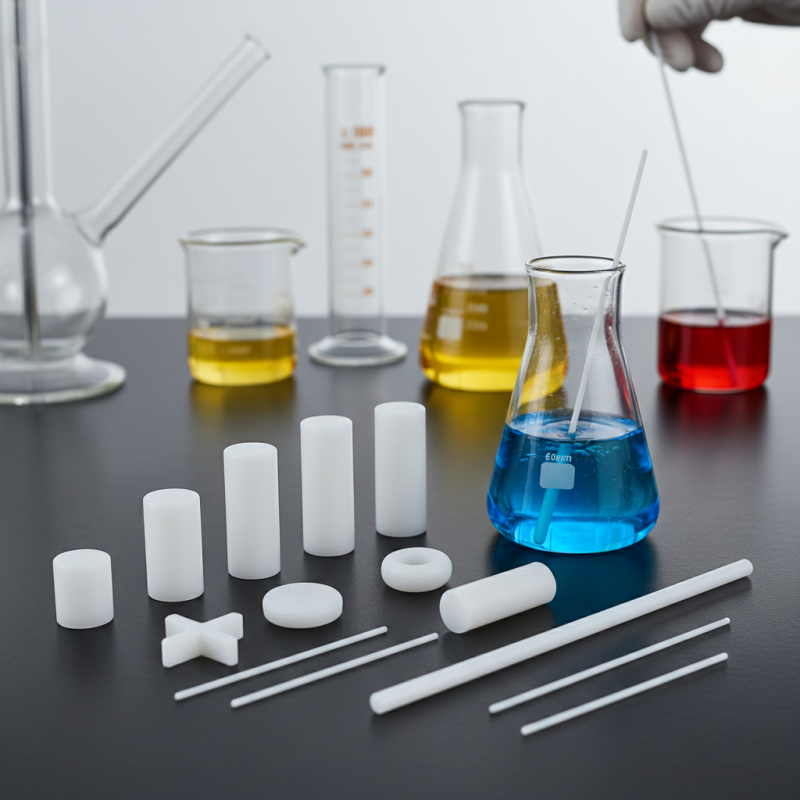
PTFE stir bars are essential tools in laboratory settings. Their chemical resistance and durability make them ideal for mixing various solutions. Scientists prefer PTFE stir bars for their non-reactive nature. This quality is crucial when working with sensitive samples. Using them can prevent contamination and ensure the integrity of experiments.
In practice, these stir bars can help in synthesizing compounds efficiently. They can withstand high temperatures and harsh chemicals. This versatility allows them to be used in diverse experiments, from organic chemistry to biological research. However, users must consider the size and shape of the stir bar. Sometimes, they may not achieve the desired mixing speed. In such cases, adjusting the stirrer speed or using a different bar could help.
Lab professionals often rely on PTFE stir bars for precise mixing. They help create uniform solutions, essential for accurate results. Yet, there are challenges. A poorly designed stir bar can lead to inadequate mixing. Additionally, not all substances work well with PTFE. Continual review of application methods is necessary for optimal results.
| Application | Description | Benefits | Common Usage |
|---|---|---|---|
| Chemical Reactions | Used to stir reaction mixtures in various chemical processes. | Inert to chemicals, ensuring accurate results. | Research laboratories, production facilities. |
| Biological Applications | Facilitating homogenous cell suspensions. | Non-reactive with biological materials. | Cell cultures, microbiology labs. |
| Solvent Mixing | Used to mix solvents in various solvent-based reactions. | Prevents contamination of solvents. | Analytical chemistry, solvent preparations. |
| Sample Preparation | Assists in preparing homogeneous solutions for analysis. | Ensures thorough mixing, enhancing consistency. | Quality control labs, forensic analysis. |
| Polymer Mixing | Used for mixing polymer solutions comprehensively. | Uniform distribution of materials, enhancing quality. | Polymer research, manufacturing processes. |
| Food Industry Applications | Mixing food-grade compounds safely. | Safe for food contact, inert nature. | Food research, flavor formulation. |
| Environmental Testing | Stirring samples for environmental analysis. | Prevents contamination, maintains integrity. | Water quality testing, soil analysis. |
| Cosmetic Formulations | Used in creating even mixtures for cosmetic products. | Inert and ideal for sensitive formulations. | Cosmetic R&D, production lines. |
| Pharmaceutical Applications | For mixing active pharmaceutical ingredients. | Ensures homogeneity in formulations. | Pharma labs, formulation development. |
| Multi-Purpose Laboratory Use | General stirring in various laboratory processes. | Versatile and efficient for many applications. | All types of research labs, educational settings. |
PTFE stir bars are essential in chemical mixing processes. Their unique properties enhance efficiency and safety. PTFE, or polytetrafluoroethylene, is known for its chemical resistance. This makes it ideal for handling corrosive substances. In fact, a recent industry report indicates that over 70% of laboratories prefer PTFE materials to reduce contamination risks.
These stir bars provide significant advantages during reactions. They ensure consistent stirring, resulting in uniform mixtures. Unlike traditional stir bars, PTFE stir bars do not react with chemicals. This minimizes the risk of unwanted reactions. Additionally, PTFE's low friction properties enable smooth operation, which is crucial in sensitive experiments.
However, challenges exist. Not all PTFE stir bars are made equal. Variability in quality can occur due to manufacturing differences. A study noted that improperly calibrated stir bars can lead to ineffective mixing. This serves as a reminder to source high-quality materials. Careful selection is vital for achieving optimal results in chemical processes.
When considering the cost-effectiveness of PTFE stir bars in global procurement, it's essential to look at their durability and resistance. These stir bars are resistant to chemical abrasions, making them ideal for various industries. Their longevity reduces the need for frequent replacements, ultimately leading to cost savings. Purchasing them in bulk enhances this benefit, decreasing per-unit costs significantly.
However, buyers must consider initial investment costs. PTFE materials can be pricier than alternatives. This upfront expense may discourage some buyers. Yet, the long-term savings often outweigh these initial costs. Evaluating the total cost of ownership is vital. Over time, the reduced consumption and maintenance improve overall financial health.
Sourcing PTFE stir bars also requires a reliable supplier. Not all suppliers offer the same quality. It’s crucial to assess the supplier’s reputation and product consistency. Sampling products beforehand can be a practical step in ensuring quality. Buyers may face challenges in finding suppliers that meet rigorous standards. This aspect requires careful research and thoughtful decision-making.
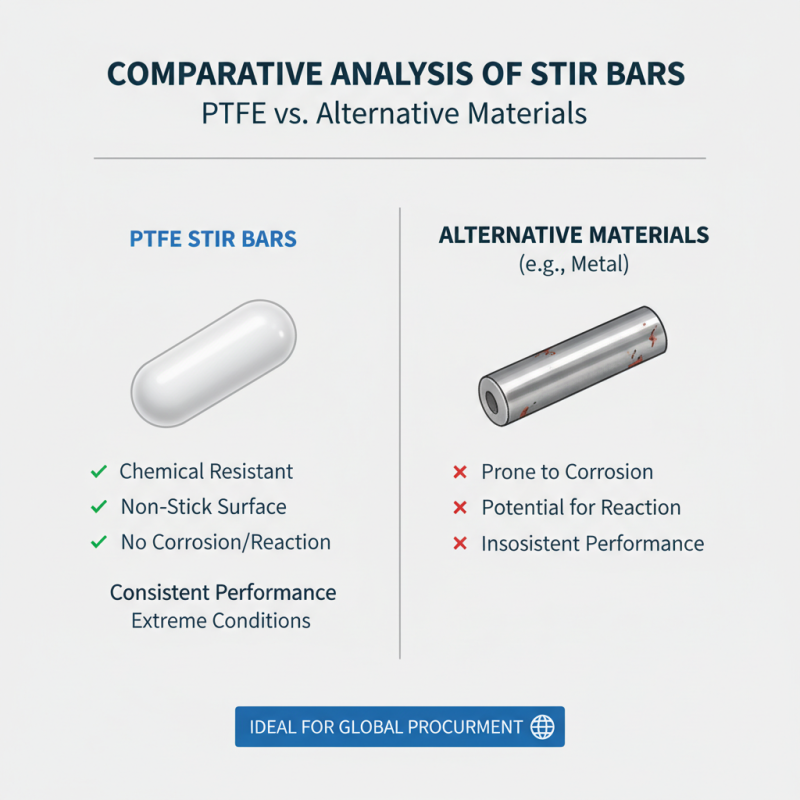
When comparing PTFE stir bars to alternatives, several factors come into play. PTFE, or polytetrafluoroethylene, is chemically resistant and non-stick. This makes it ideal for various applications in global procurement. Unlike metal stir bars, PTFE bars won’t corrode or react with harsh chemicals. They provide consistent performance even under extreme conditions.
However, there are considerations when using PTFE. Its low density can lead to floating in certain solutions. This may affect stirring efficiency. On the other hand, materials like glass may offer better density but can be breakable. Glass stir bars also lack the chemical resistance of PTFE. Each option presents unique advantages and challenges.
In laboratory settings, the choice of stir bar influences accuracy and safety. PTFE’s thermal stability is beneficial for high-heat processes. Alternatively, metals can withstand rigorous use but may contaminate samples. Understanding the specific requirements of each application is crucial. All materials have their strengths and weaknesses. A thoughtful analysis can lead to improved outcomes in procurement and laboratory efficiency.
The use of PTFE stir bars is commonplace in laboratories. However, their environmental impact warrants attention. PTFE, or polytetrafluoroethylene, is not biodegradable. Once discarded, these stir bars can persist in landfills for hundreds of years. This raises concerns about pollution and waste management in industrial settings.
Data from a 2022 report by a leading environmental organization indicates that industrial plastics contribute significantly to ocean pollution. PTFE, often categorized under such plastics, can leach toxic substances into waterways. A study found that 30% of the collected PTFE waste ended up in marine environments, impacting marine life and ecosystems. While their benefits in laboratory settings are clear, the long-term effects on the environment need further exploration.
Moreover, alternatives exist but may not match PTFE's chemical resistance or durability. Industries must weigh the benefits against the ecological footprint. Improved recycling methods and sustainable practices are essential. Awareness and action regarding PTFE usage can potentially reduce its environmental footprint. The conversation must continue, reflecting on both efficiency and sustainability in industrial practices.