Top 10 Tips for Choosing the Right PTFE Stirrer Bar
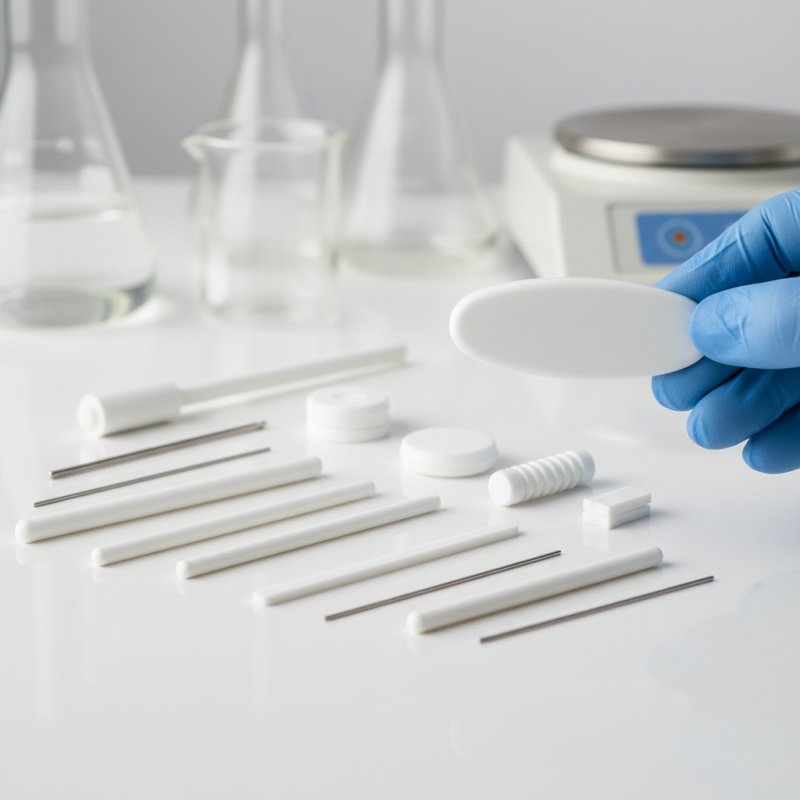
Choosing the right PTFE stirrer bar can significantly impact your mixing process. These tools are essential in laboratories and various industries. However, not all PTFE stirrer bars are created equal. Each has unique characteristics that may suit different applications.
Consider the size and shape of the stirring bar. A longer, thinner bar might be ideal for narrow containers, while a wider one performs better in larger vessels. The material's chemical resistance is another crucial factor. PTFE is known for its durability, but even within this category, some types are better suited for specific chemicals.
Reflecting on past experiences can guide your choice. Have you used a PTFE stirrer bar that underperformed? Learning from those mistakes can lead to better decisions in the future. Ultimately, selecting the right PTFE stirrer bar can enhance your efficiency and prevent costly errors in your work.
Understanding PTFE Stirrer Bars: Composition and Benefits
PTFE stirrer bars are widely used in laboratories. They are made from polytetrafluoroethylene, a material known for its chemical resistance. PTFE can withstand harsh solvents and acids. This makes it an excellent choice for mixing various substances. Their non-stick property is a significant advantage. Substances do not adhere easily, leading to better mixing efficiency.
The composition of PTFE stirrer bars contributes to their benefits. They are durable and can endure long mixing sessions. This material also reduces contamination risk. However, users may find some bar shapes less effective than others. It’s essential to consider the specific mixing needs of your applications. The size and shape can impact the mixing speed. It might take some experimentation to find the perfect fit. Some users struggle with bars that are too small or too large for their containers.
Choosing a PTFE stirrer bar isn't straightforward. Users often overlook the importance of compatibility with their materials. A mismatch can lead to ineffective mixing. It's crucial to evaluate the properties of both the stirrer and the substances involved. Regular reflection on the performance can lead to improved outcomes in your mixing processes.
Top 10 Tips for Choosing the Right PTFE Stirrer Bar
| Tip Number |
Tip |
Benefits |
| 1 |
Consider the Length |
Ensures appropriate mixing depth |
| 2 |
Choose the Right Diameter |
Affects the speed and efficiency of stirring |
| 3 |
Look for Chemical Resistance |
Prevents corrosion and extends lifespan |
| 4 |
Evaluate Magnetic Properties |
Improves compatibility with magnetic stirrers |
| 5 |
Assess Temperature Tolerance |
Allows use in high-temperature applications |
| 6 |
Check for Ease of Cleaning |
Minimizes contamination risk between uses |
| 7 |
Review Shape Options |
Different shapes allow for varied mixing styles |
| 8 |
Consider Weight |
Heavier stirrers can mix more effectively |
| 9 |
Look for Non-Stick Properties |
Prevent materials from adhering to the stirrer |
| 10 |
Seek Durable Construction |
Ensures longevity and reliable performance |
Key Factors in Selecting the Right Size and Shape of Stirrer Bars
When selecting the right PTFE stirrer bar, size and shape are crucial. A stirrer bar that is too long might not fit well in the container. On the other hand, a short stirrer bar may not create enough movement in the liquid. The diameter also matters; a thick bar may not work effectively in narrow vessels.
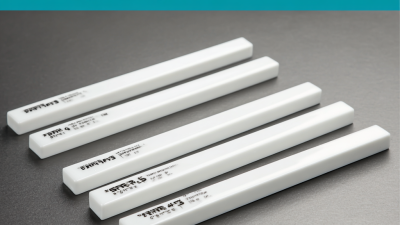
Consider the shape as well. A straight bar is suitable for simple mixing tasks. Yet, for more complex solutions, a bent or octagonal stirrer bar can enhance agitation. It’s essential to visualize how the stirrer will perform in different scenarios. You might find that your initial choice isn't ideal upon further testing.
Don’t overlook the surface texture. A smooth bar minimizes residue build-up, while a grooved one can improve mixing. Experimentation could lead to unexpected results. Finding the perfect fit will take time and patience. It’s a process of trial and error, but that’s part of the journey in achieving effective mixing.
Top 10 Tips for Choosing the Right PTFE Stirrer Bar
This chart provides a visual representation of the importance of various factors to consider when selecting the right PTFE stirrer bar. Factors such as size and chemical resistance have a higher importance rating compared to cost and compatibility, indicating what should be prioritized by users during their selection process.
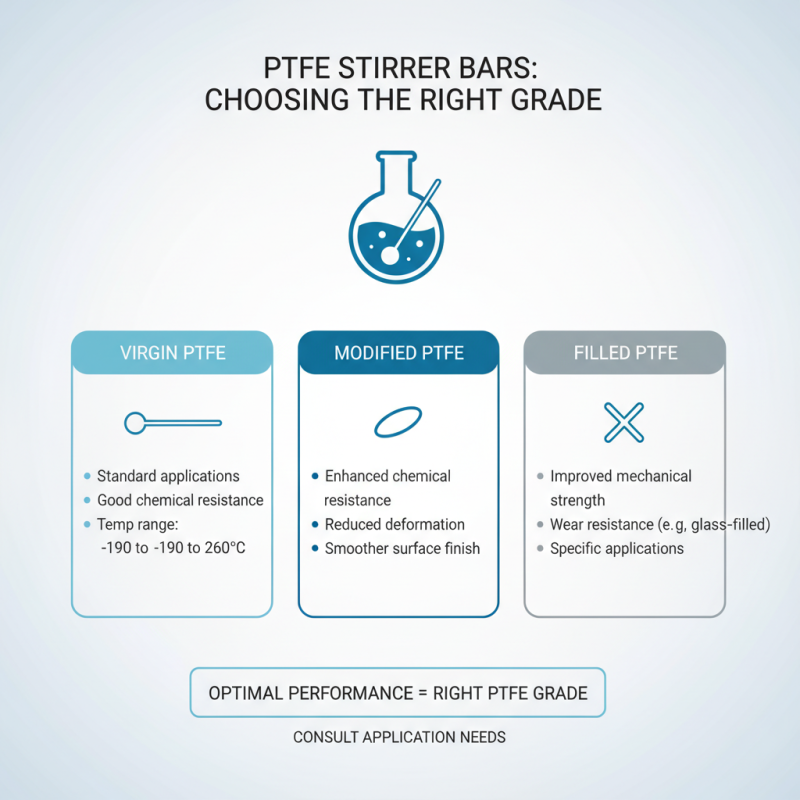
Evaluating Chemical Resistance and Temperature Tolerance of PTFE
When selecting the right PTFE stirrer bar, evaluating its chemical resistance and temperature tolerance is crucial. PTFE, known for its excellent resistance to a wide range of chemicals, can withstand harsh environments. According to a study from the American Chemical Society, PTFE maintains structural integrity in acidic and basic solutions, up to 200°C. However, certain strong oxidizers can lead to degradation.
Temperature tolerance is equally vital. Many applications operate above 260°C, where PTFE begins to lose mechanical properties. In a lab setting, inadequate temperature range can affect stirrer performance. A report by the Journal of Applied Polymer Science suggests that prolonged exposure to high temperatures can cause changes in viscosity and flexibility. It's important to analyze usage scenarios.
Selection is not always straightforward. The specifications might seem suitable, yet real-world conditions vary. Testing the stirrer under your specific conditions is advisable. Unforeseen reactions are a possibility when using PTFE with specific solvents. Pay attention to usage history; previous experiments may offer insights into potential issues. Your choices can significantly impact experimental outcomes, so thorough evaluations are essential.
Industry Best Practices for Maintenance and Longevity of Stirrer Bars
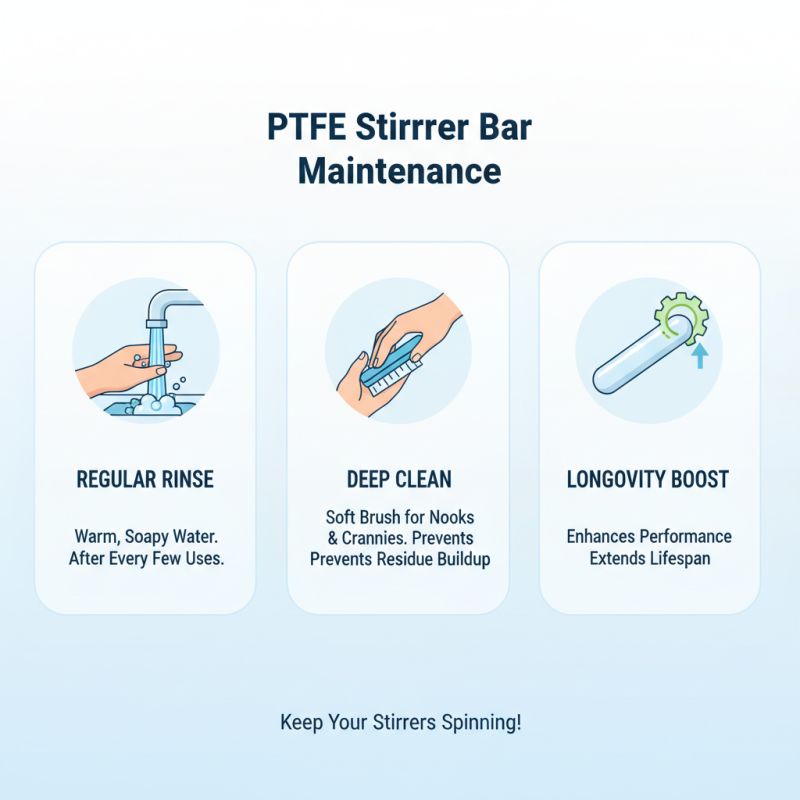
When working with PTFE stirrer bars, maintenance is crucial for their longevity. Regular cleaning is a basic yet often overlooked step. Every few uses, rinse the stirrer bars in warm, soapy water. This helps remove any residues. A deep clean with a soft brush can reach hidden areas. Sometimes, users forget those nooks and crannies, leading to performance issues.
Storage also plays an essential role. Keep stirrer bars in a designated container to prevent damage. A cluttered workspace can result in scratches or chips. Users should also inspect their stirrer bars periodically for signs of wear. Small imperfections can impact the mixing process. Learning to recognize these signs is key for effective use.
In practice, it's important to avoid dropping the stirrer bars. It may seem minor, but even a slight fall can cause unseen damage. Users often underestimate this risk, leading to premature failures. Taking the time to check for physical damage is a habit worth developing. By paying attention to these details, one can enhance the performance and lifespan of PTFE stirrer bars.